
Dashboard Design
B2B Enterprise
Shipped
ROLE
Product Designer
TEAM
+1 Product Designers | Product Manager | Development Team | CEO
TIMELINE
2.5 Weeks
WHAT I DID
User Research | Wireframing | Prototyping | Status Flow Mapping | Stakeholder Management
TLDR:
Problem
Customers had no real time view into interview progress and had to rely on FlairX admins to deliver daily reports. In turn, admins spent 2+ hours everyday compiling these reports.
Solution
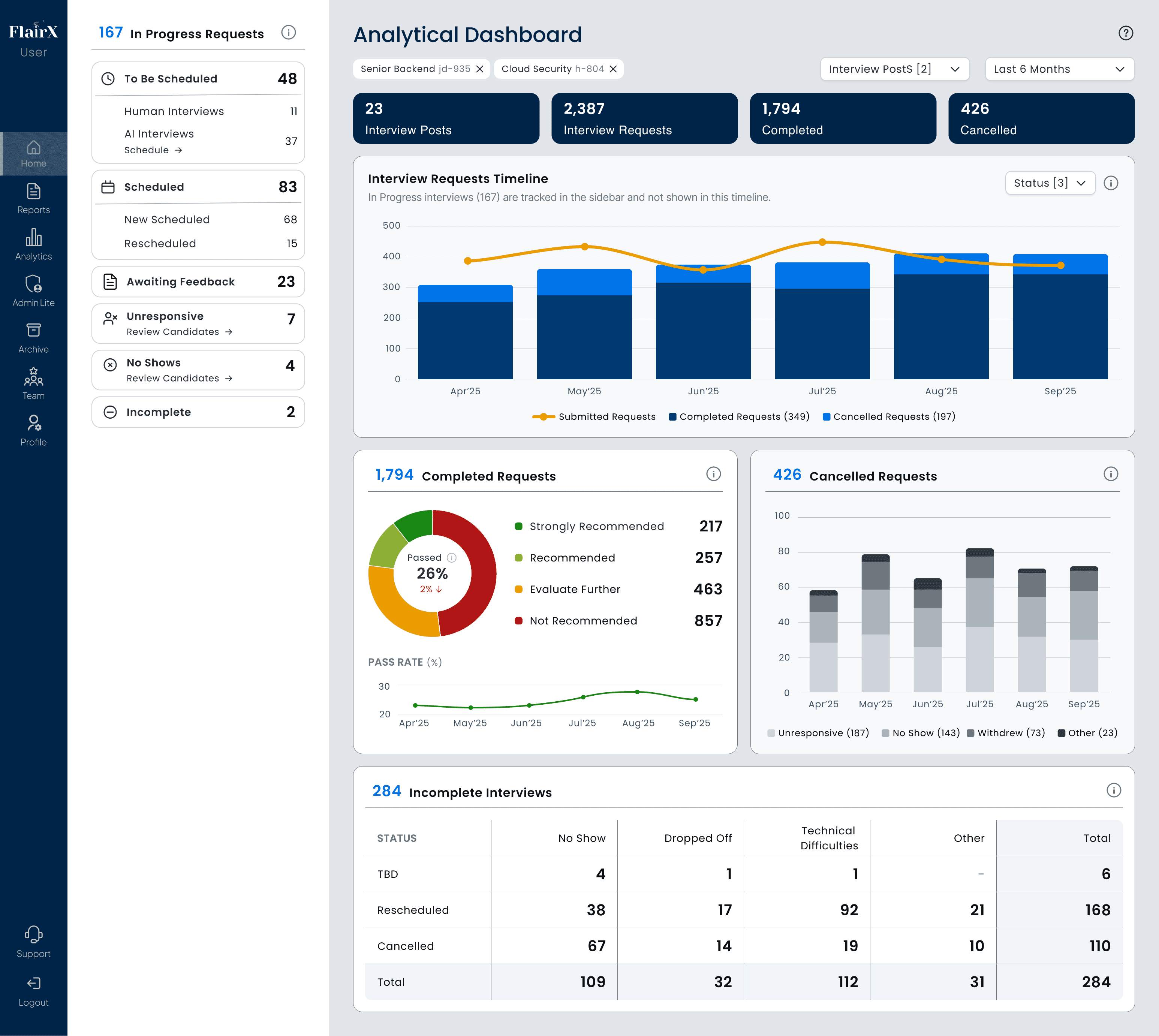
An analytical dashboard to deliver real-time, in-depth interview progress insight to customers.
2+ Hour Admin Time Saved
Admins could return to their core duties and, if needed, deliver reports with the click of a few buttons.
40+ Interview Statuses Streamlined
Unified inconsistent terminology across the platform, resolving recurring confusion about what each status actually meant.
CONTEXT
Hurdles When Scaling From 15 to 100 Interviews Per Role
FlairX is a B2B SaaS platform for AI and expert-vetted technical interviews where Admins manage interview logistics and customer relations for client companies. Every day admins provided customers with daily interview progress updates. A system that won't be sustainable as the company scaled.
PROBLEM
Customers Had No Window Into Interview Progress
Customers relied entirely on admin-generated reports delivered once daily, which lacked the granular details. No real-time access. No self-service.
Admins Spent 2 Hours Every Day on Manual Reporting
This wasn't part of their intended workflow. It was a side effect that became a daily grind which was time-consuming, tedious, and error-prone.
SPEED OVER POLISH
Designing Under a Tight Deadline With Limited Resources
Vague Requirements
Stakeholder feedback was directional, not specific
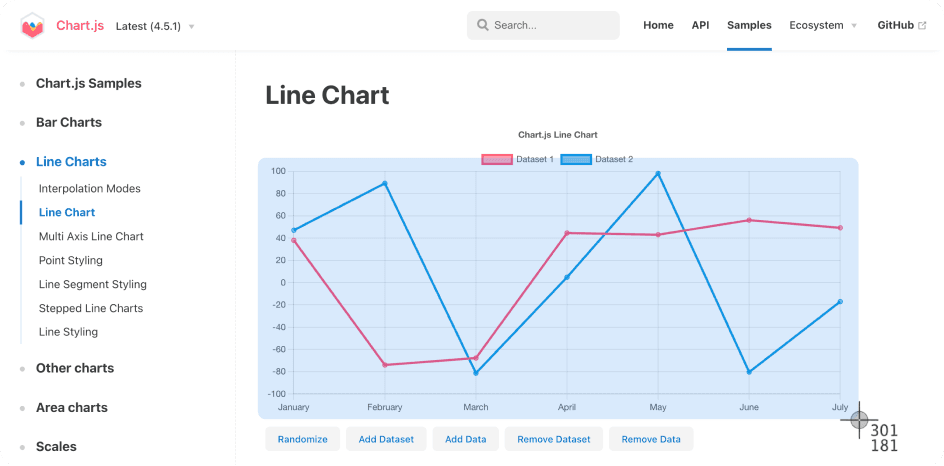
Chart.js Only
No time or support for custom or innovative visualizations
No Direct User Access
Couldn't validate assumptions through customer interviews
Solving the core problem on time with a functional solution mattered more than perfecting it.
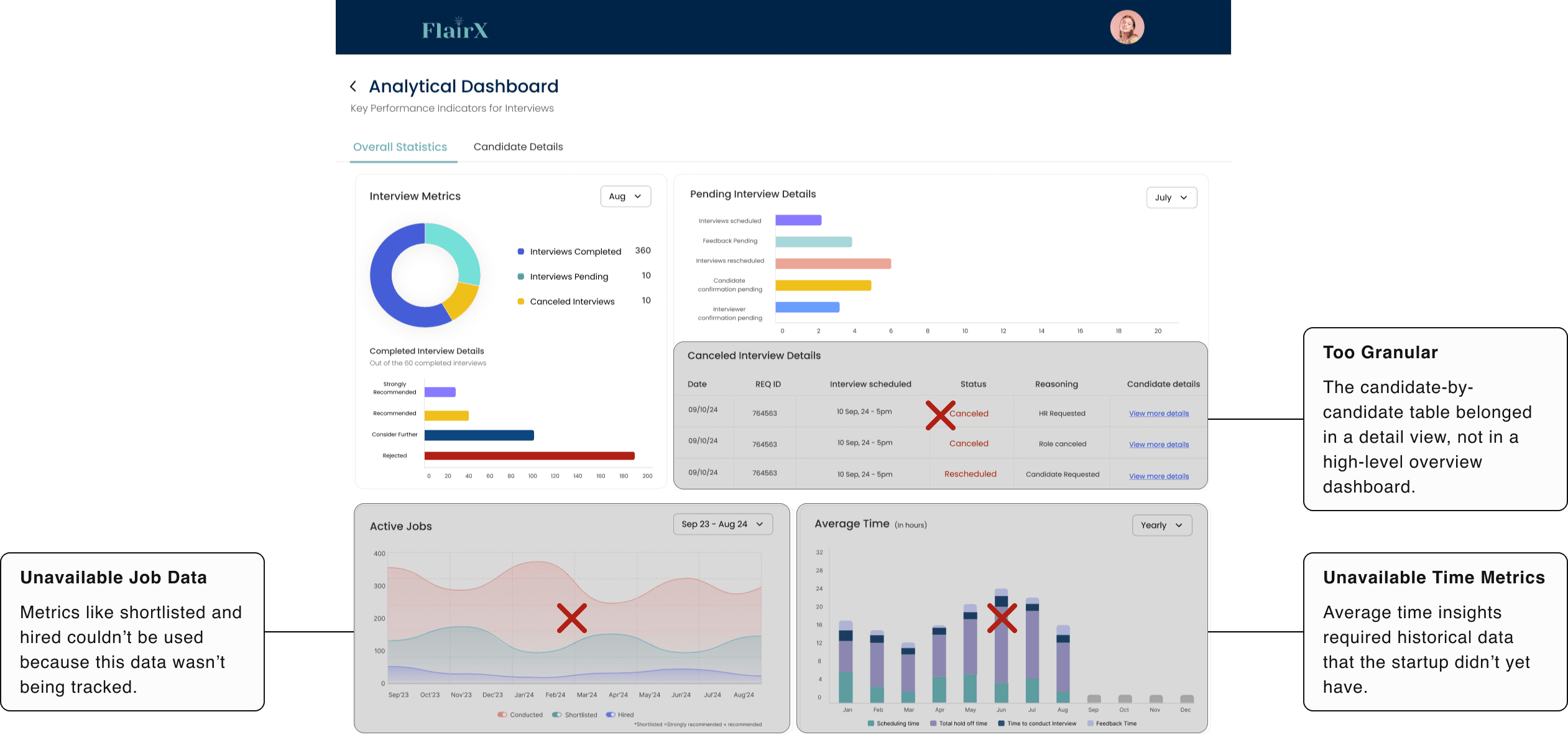
Scoped the Dashboard Concept Down to MVP Essentials
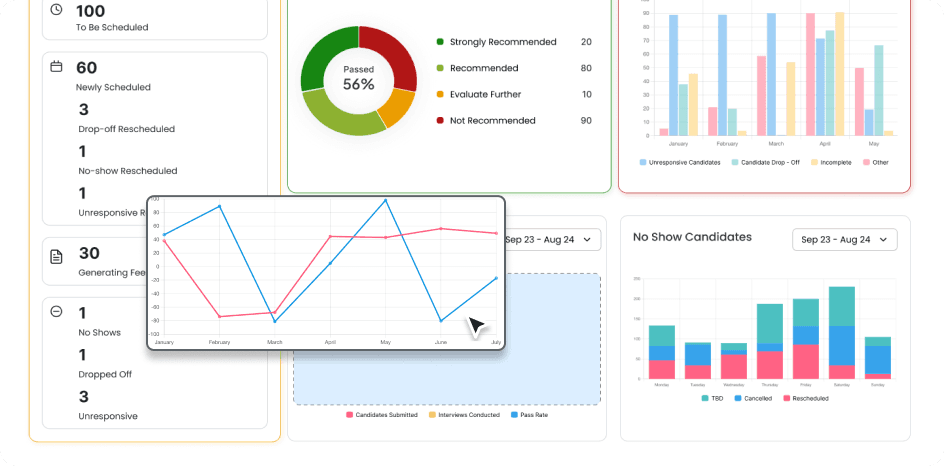
Used Chart.js Screenshots Directly in Figma to Accelerate Iteration
Trade Offs
Weak Visual Polish
Minimal styling for hierarchy and brand style alignment.
Functionality Over Refinement
Missed opportunity to make the data intuitive, streamlined, and interactable.
SCREENSHOT INSIGHTS
Early Ideations Failed Without Direct User Access
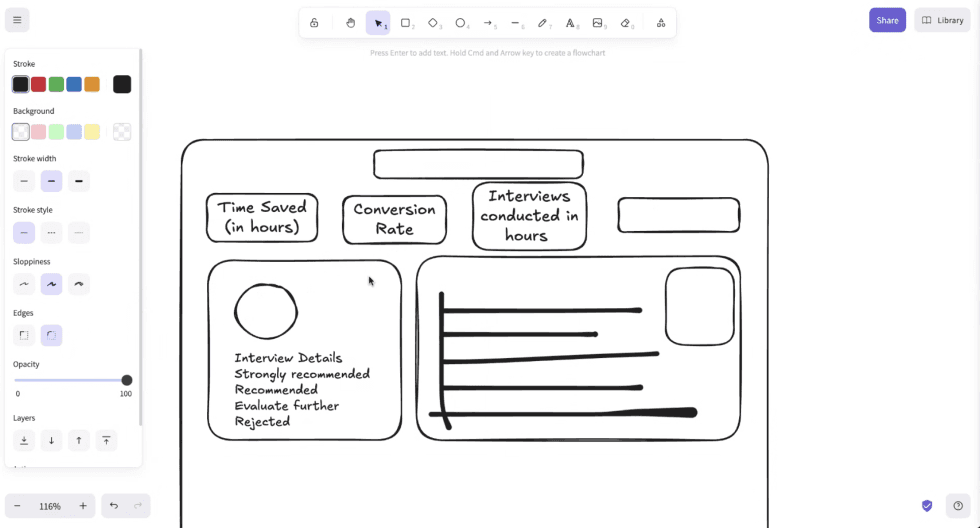
I researched dashboard UX patterns and studied HR/CRM dashboards, but early iterations kept missing the mark. Generic dashboard patterns didn't match our interview-as-a-service use case.
Wireframe
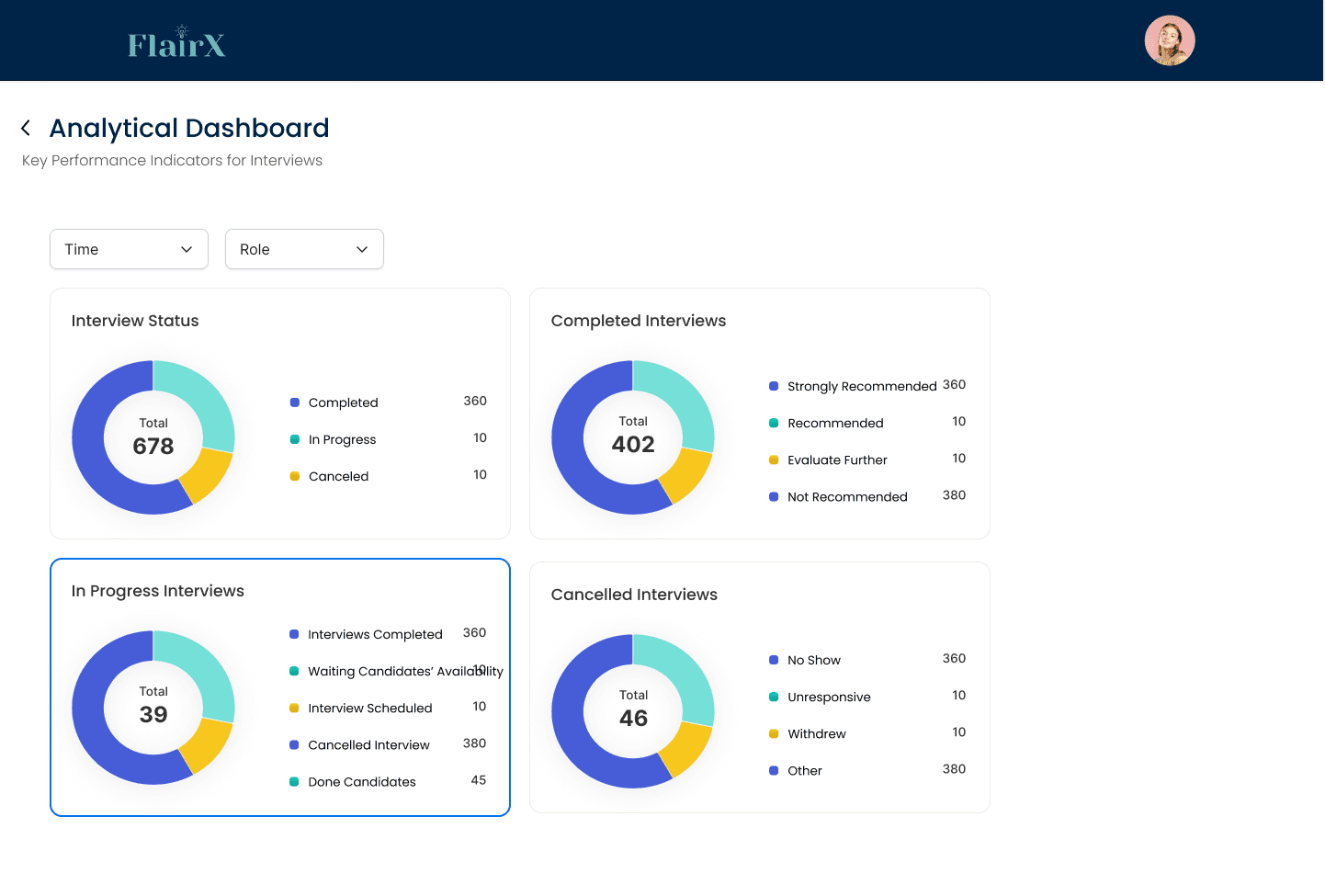
Concept A
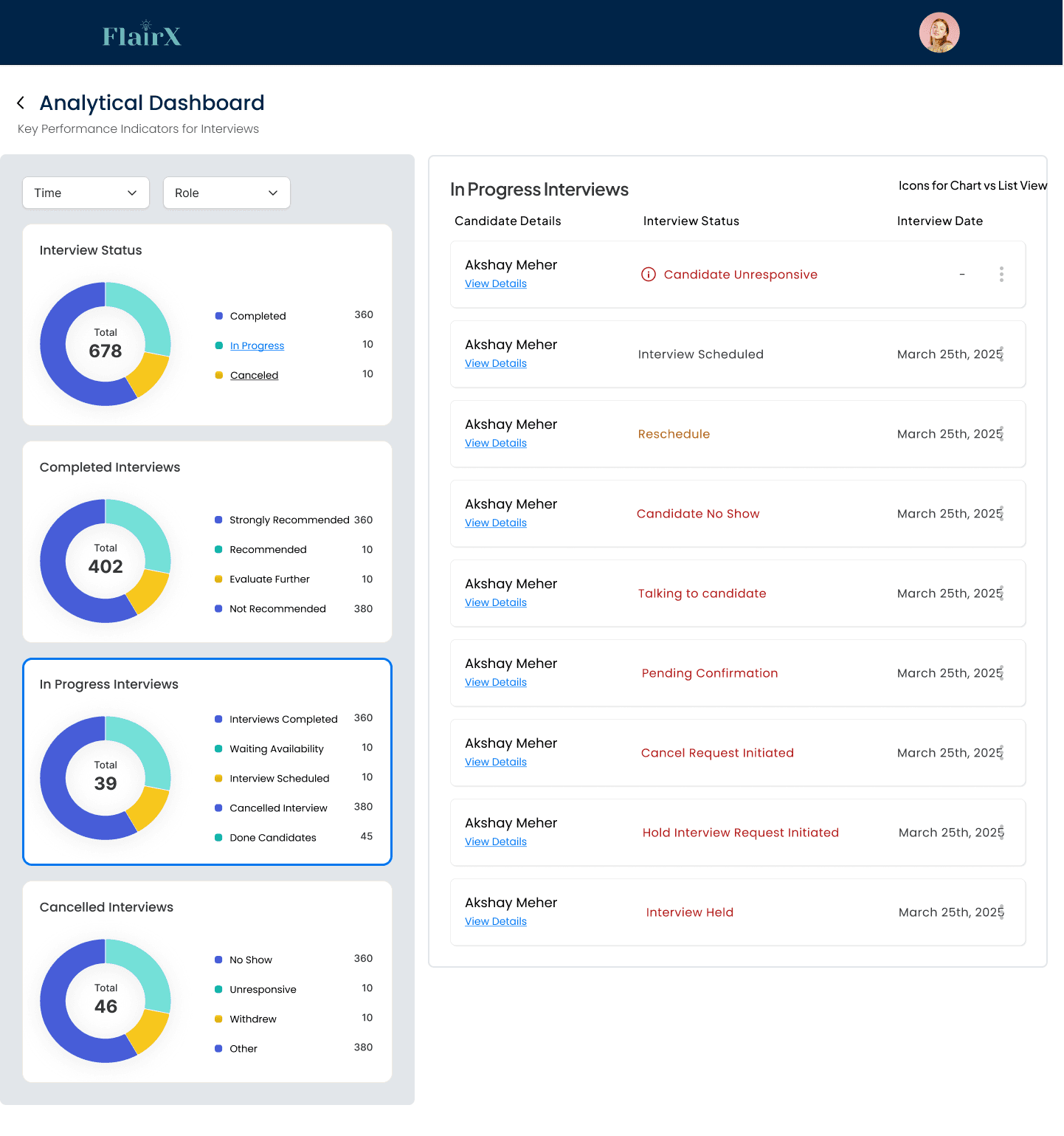
Concept B
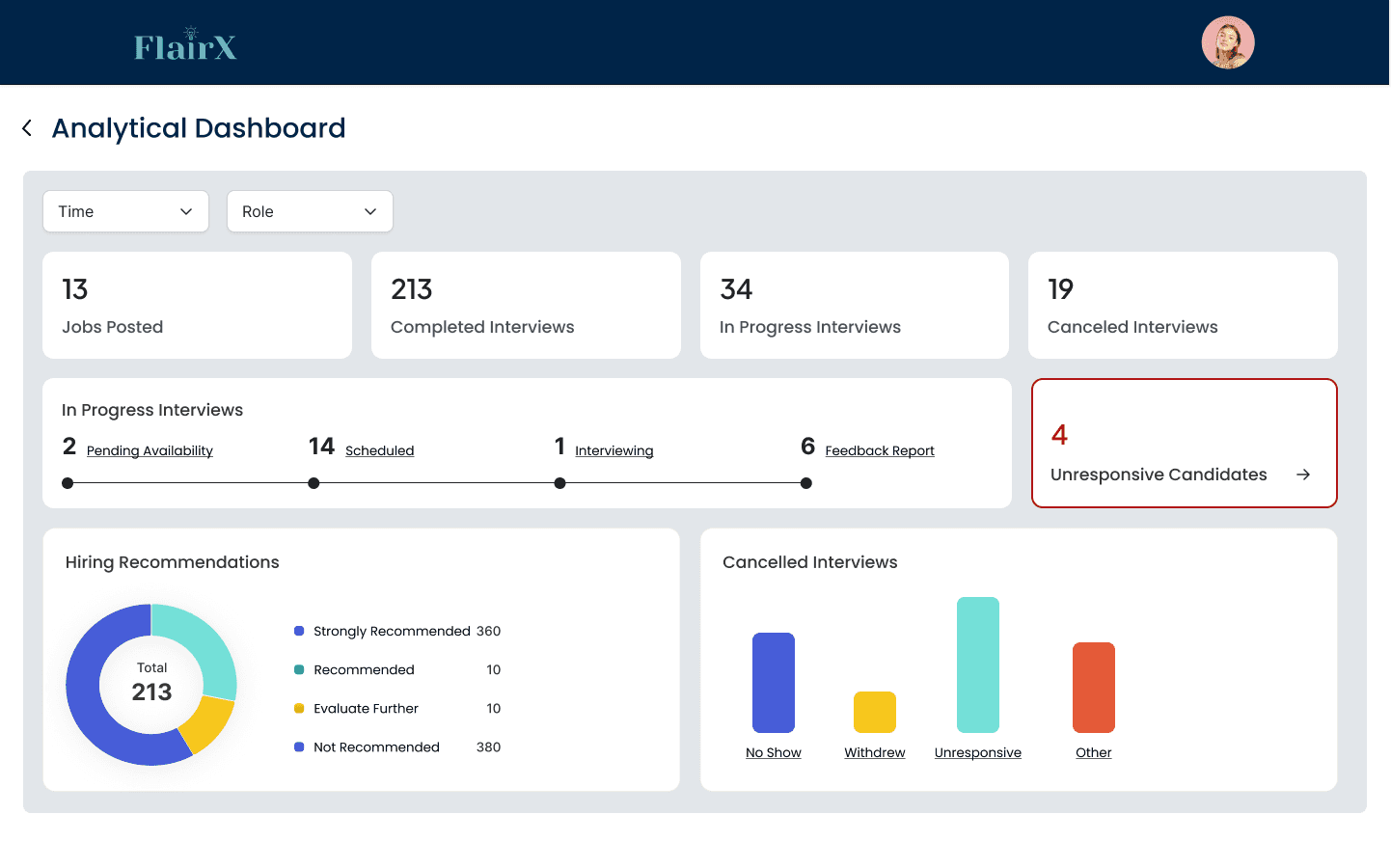
Concept C
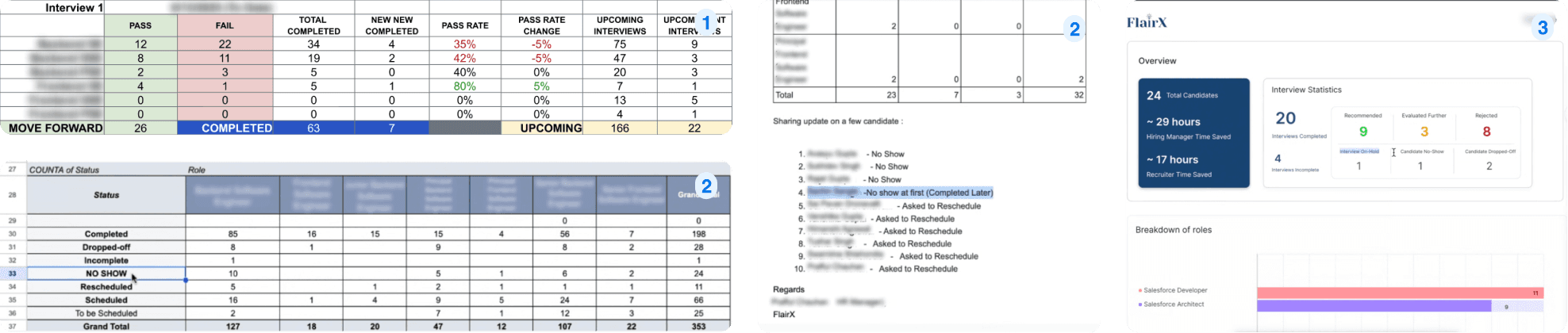
Screenshots Showed What Customers Actually Tracked
1
Candidate Quality and Volume Trends
2
Visibility Into Mid-Flow Disruptions
3
Preferred Benchmark Report Data
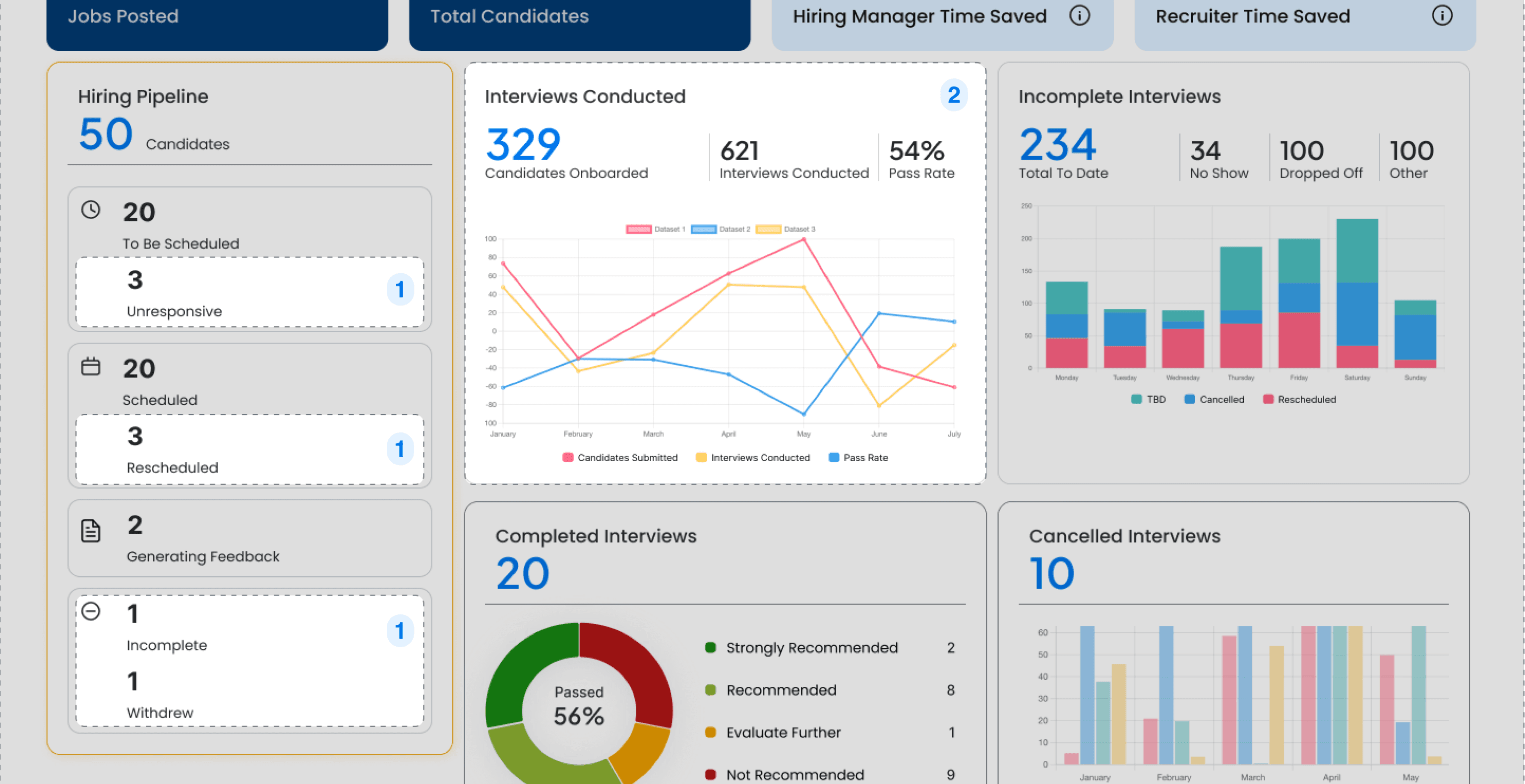
Matching the Customers' Needs
1
Surfaced Problem Statuses in the "Hiring Pipeline"
Broke down the "In Progress" tile to surface disruptions that affected operations
2
Introduced New Comparison Rates Graph
Showed candidates sent, interviewed, and pass rate over time in a single view.
UNTANGLING STATUS CHAOS
Defining the Major Interview Stages Became a Challenge
We kept iterating on the "In Progress" tile because condensing granular statuses into a few clear stages proved difficult. Many lived in gray areas, making it hard to define the major steps in the flow.
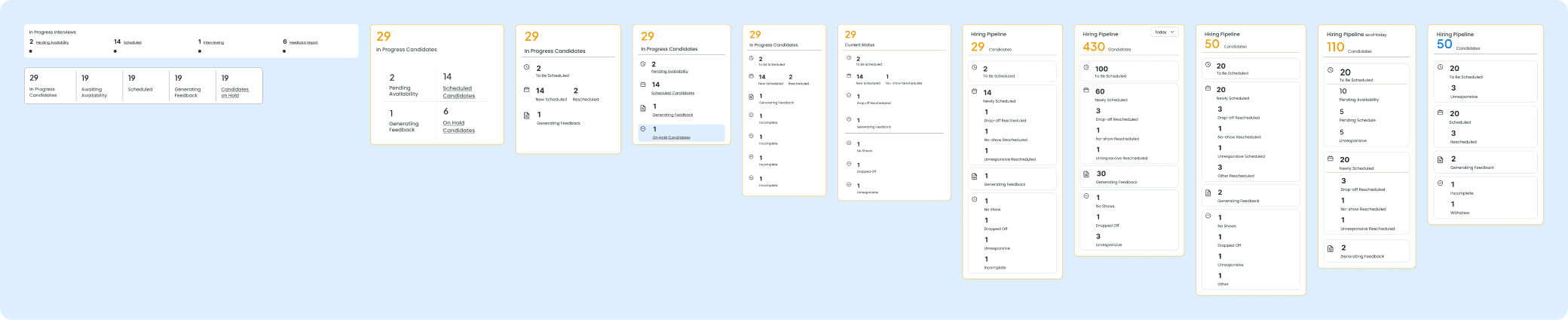
Everyone Asked the Same Questions since we Lacked Consistent Terminology
What is the difference between “In Progress” vs “Ongoing?"
Isn't “Interview conducted” and “Completed” the same thing?
Creating Clarity by Standardizing 40+ Statuses
I audited the entire interview flow and worked with stakeholders, designers, developers, and PMs to finalize consistent labels and stages.
FINAL DESIGN
An MVP Dashboard That Met the Demand
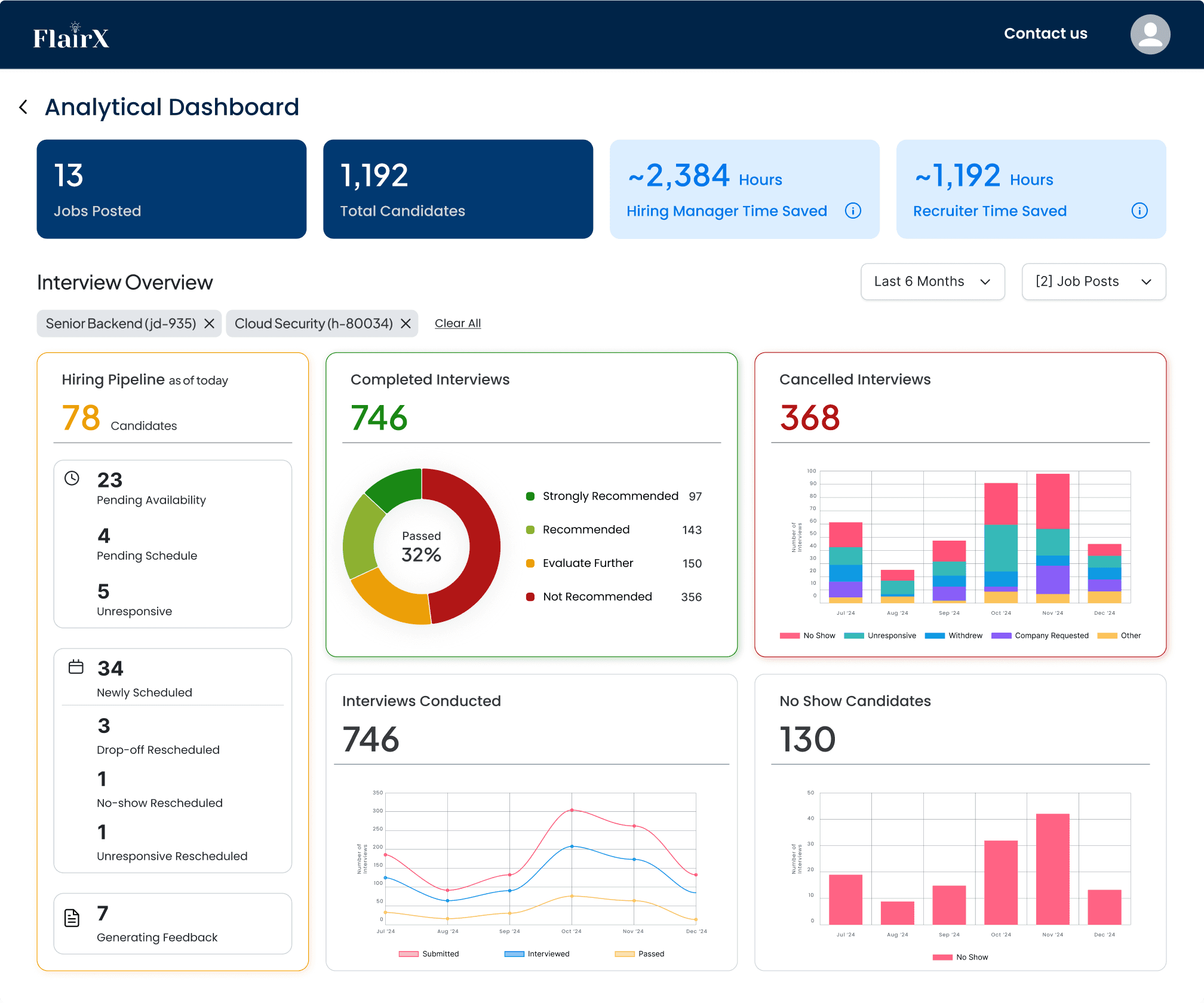
ITERATING ON THE MVP
What the Shipped Version Couldn't Address
The shipped version solved the immediate crisis, but left room for improvement:
Disconnected Metrics
Increase Action Visibility
Redundant Data
Improve Accessibility
Optimize Charts
Dashboard Phase 2
REFLECTION
What I Learned
Imperfect shipped beats perfect delayed
I learned that shipping something rough that solves the core problem beats endlessly refining details. The MVP worked; polish came in V2.
Second-hand artifacts reveal mental models
When you can't talk to users directly, look at what they create. Spreadsheets, notes, and workarounds show how people actually think about problems